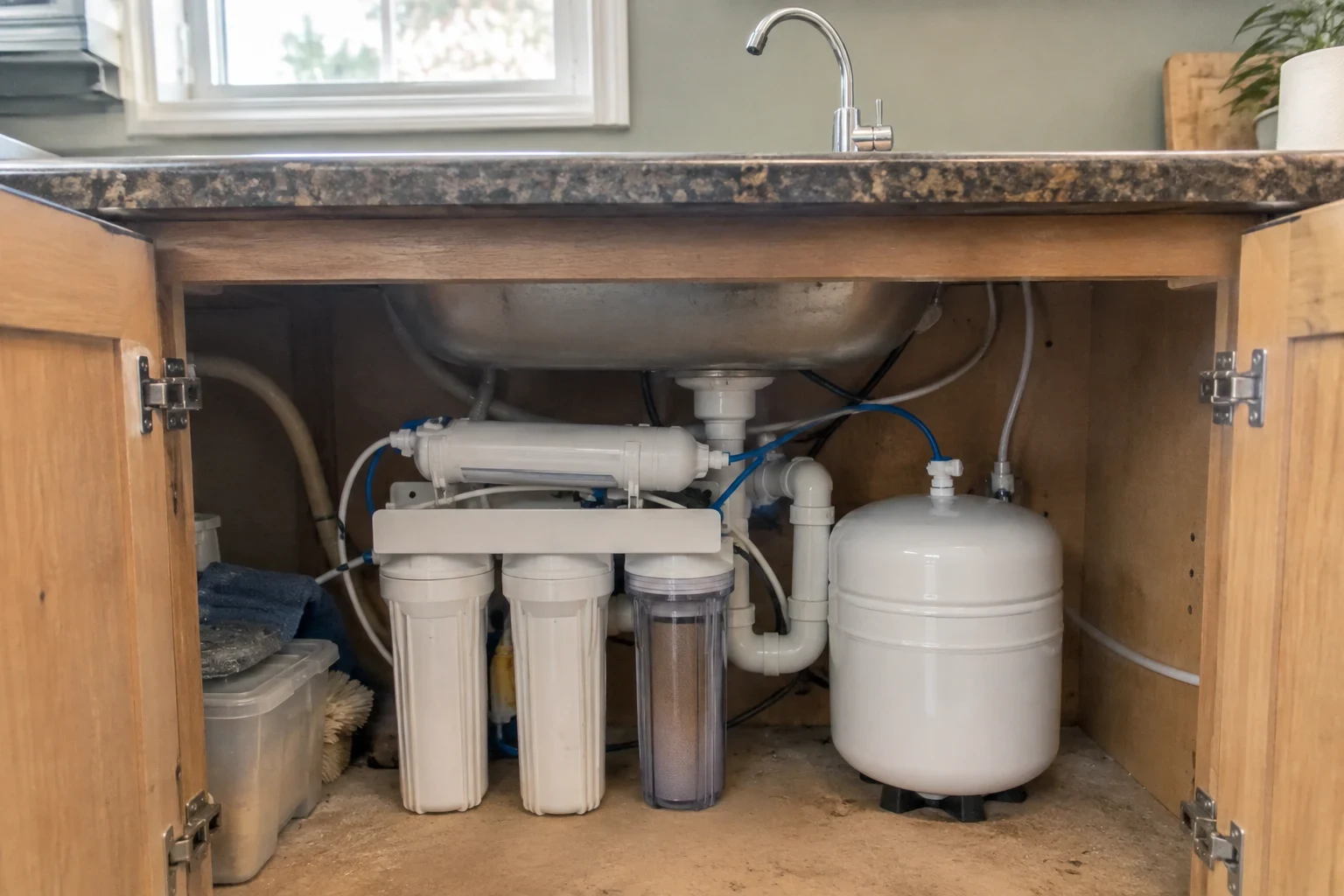
What Are the Negatives of Reverse Osmosis for a Mequon Home?
Reverse osmosis makes excellent drinking water, but it comes with a few tradeoffs you should hear about before anything goes under your sink.
What are the negatives about RO?
The main negatives of reverse osmosis are the water it sends down the drain, a slower flow at its faucet, flatter taste from removed minerals, and regular filter and membrane changes. None of these are deal breakers for most homes, but they matter. Talk through your setup with us for a free quote at (262) 800-6327.
How much water does an RO system send down the drain?
Every RO system rinses its membrane as it works, and that rinse water goes to your drain. The ratio depends on the system design, your water pressure and how clean the water is coming in. Older or cheaper units waste more than newer, efficient ones.
For most families the extra water is small next to showers and laundry, since RO only makes drinking and cooking water. Still, if wasted water bothers you, ask about the drain ratio of any unit before you buy. We will tell you plainly what the system we recommend does.
Why is the RO faucet slower, and does winter make it worse?
Water pushes through an RO membrane slowly, so the system fills a small storage tank and the dedicated faucet draws from that. Filling a large pot can feel slow, and if the family drains the tank, it takes a while to refill.
Cold water slows a membrane down too. During a Wisconsin winter the water reaching your home runs colder, and you may notice the tank refilling more slowly than it did in summer. Low household pressure has a similar effect, which is why we check pressure at your sink before suggesting a system size or an added pump.
Does RO remove minerals you might want?
Yes. The membrane removes most dissolved minerals along with the things you want gone, so the water can taste flat or a little different from what you are used to. Most of the minerals in a person's diet come from food, not water, so this is mainly about taste.
If you prefer a fuller taste, a remineralizing stage can be added after the membrane. It puts a small amount of calcium and magnesium back in. We can include it in your quote so you can decide with the details in front of you.
What upkeep comes with an under-sink RO system?
This is the negative people underestimate. An RO system is not something you install and forget. The prefilters protect the membrane, and if they go too long, the membrane wears out early and water quality drops.
After we install your system, we check back to see how it is running and walk you through what to replace and when. We would rather you know your own system than wonder whether it is still doing its job.
- Sediment and carbon prefilters: changed regularly, often once or twice a year depending on your water
- The membrane: lasts several years when the prefilters are kept up
- Polishing filter: usually changed on a similar schedule to the prefilters
- Storage tank: worth a quick pressure check during filter changes
- Cabinet space: the tank and filters take up a good part of the area under your sink
When is RO the wrong first step?
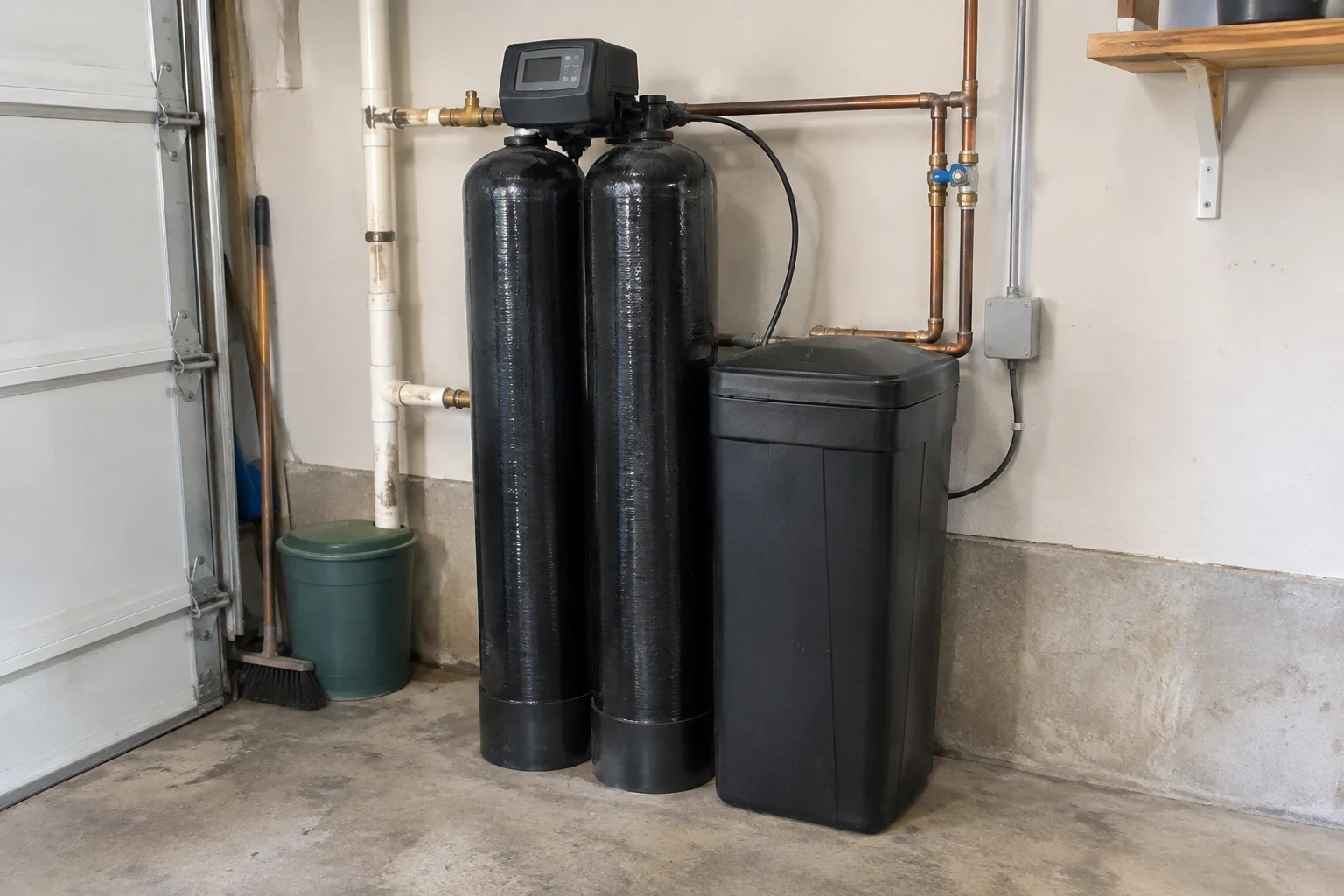
Hard water and iron are tough on a membrane. Many homes around Mequon use private wells, and if yours carries a lot of hardness or iron, sending that straight into an RO unit shortens its life. In that case a water softener or well water treatment usually comes first, with RO added afterward for drinking water.
RO also only treats one tap. If your concern is chlorine smell in the shower or taste at every faucet, whole-home filtration covers the whole house in a way an under-sink unit cannot. We will tell you honestly which option fits the problem you actually have.
More questions about reverse osmosis
Can an RO system feed my refrigerator and ice maker?
Often, yes. A line can usually be run from the RO system to the fridge, though distance and the route through cabinets or floors affect how simple that is.
Does reverse osmosis work alongside a water softener?
It works well with one. The softener protects the membrane from hardness, and RO removes much of the extra sodium from softened water at the drinking tap.
Does an RO system need electricity?
Most under-sink systems run on your home's water pressure alone. If your pressure is low and a booster pump makes sense, that pump needs a nearby outlet.
Can I spread out the cost?
Financing is available through U.S. Bank Avvance, on approved credit, and full payment is due at the completion of the install. Your quote holds for 30 days.
Weighing RO for your kitchen?
Tell us about your water and your sink, and we will give you a free quote, explain the upkeep honestly, and share financing information if you want it.