ServicesWater Softeners
Water Softeners in Mequon
Hard water shows up as chalky faucets, cloudy glasses and mineral buildup in your water heater. We match the softener to your household, program it to use salt sparingly, and follow up after the install to confirm it's working the way it should.
What a softener does, and when it's the right fit
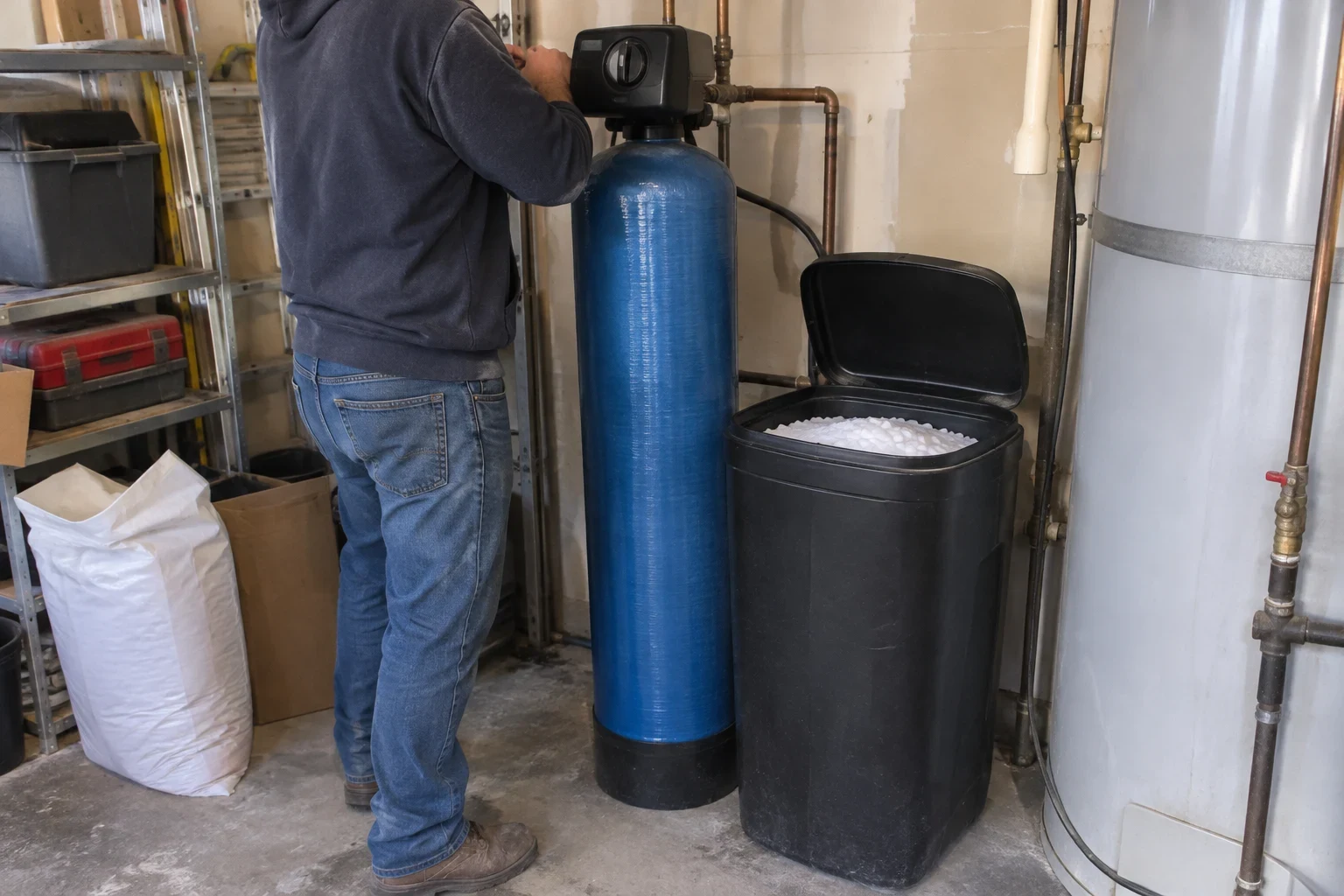
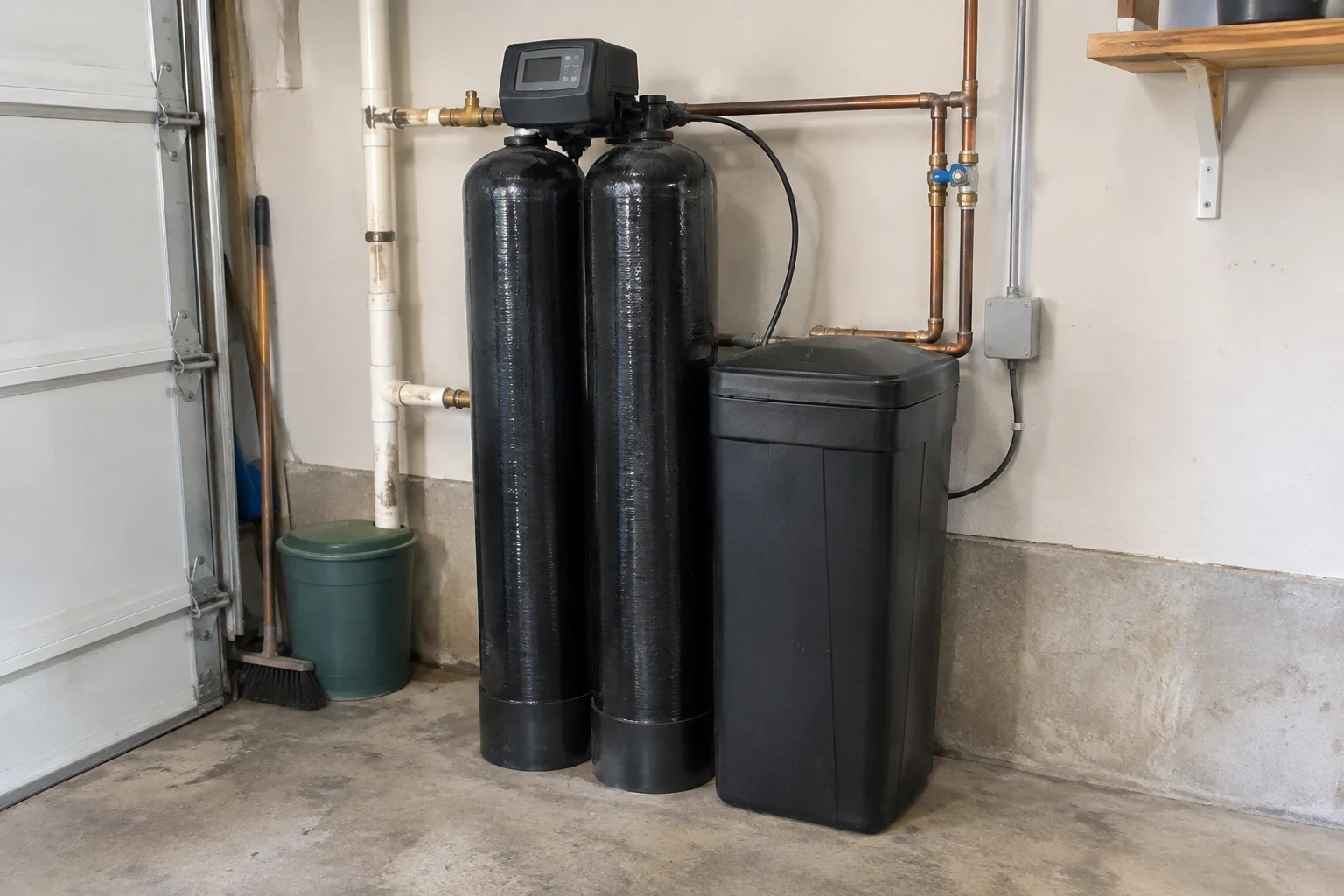
Hard water carries dissolved calcium and magnesium. A softener sends that water through a bed of resin that holds onto those minerals and releases a small amount of sodium or potassium in their place. When the resin fills up, the system rinses it with salty brine from the second tank and it is ready again. The result at your taps is water that lathers well, rinses clean and stops building scale inside pipes and appliances.
Softening solves hardness and light iron. It does nothing for chlorine taste or other contaminants, so if those are your main complaint, whole-home filtration or reverse osmosis is the better place to start, and we will tell you that on the phone. Many homes around Mequon run on private wells, where hardness is often higher, and in those cases a softener frequently works best paired with well water treatment.
Soft water on day one is not where our job ends. We get back in touch after the install to see how the system is settling in and to go over the small habits that keep it running well for years.
What's included with your softener install
Sizing for your household
We size the softener from the hardness and iron levels in your water, using your utility report or results you already have, plus how many people live in your home. Too small a unit regenerates over and over and eats salt. Too large a unit can leave resin sitting idle.
A bypass valve
We install a bypass so you can switch the softener out of the line and still have water everywhere else in your home. That keeps any future service short and easy.
Proper drain and brine connections
The drain line for regeneration gets an air gap, so wastewater has no path back into your supply. We set the brine tank somewhere you can reach without wrestling a bag of salt around corners.
Programming and a walkthrough
We enter your hardness, set how often the system regenerates and choose a time for it, usually overnight while nobody is using water. Then we show you how to read the display, top off the salt and put the system in bypass.
Cleanup and old unit removal
Replacing an old softener? We disconnect it and take it with us. The work area is cleaned up before we go.
Warranty on the parts that matter
You get 5 years of coverage on the control valve, circuit board and filter media. Our labor on the original install carries a 1 year warranty.
Signs your home could use a softener
White crust on fixtures
That chalky film on faucets, showerheads and glass shower doors is mineral scale. Scrub it off and it comes right back.
Spotty dishes and dull laundry
Glasses leave the dishwasher looking cloudy, and towels stay scratchy even after a full cycle.
Soap that won't lather
Minerals fight against soap. You end up pouring extra shampoo and detergent, and your skin still feels coated after a shower.
Rumbling from the water heater
Popping or rumbling when the heater kicks on usually points to mineral sediment settled at the bottom of the tank. That layer forces the heater to work harder and shortens its life.
An old softener that's falling behind
Hardness creeping back, salt that never seems to go down, or a unit that cycles constantly are all signs of a worn valve or spent resin.
How a softener install works
- 1
A phone call and a free quote
You tell us what you're seeing and how your home gets its water. We give you a free quote by phone and can explain financing options on the same call. Your quote holds for 30 days.
- 2
Install day
Most installs happen near where the main line enters your home, often in the basement. We shut off the water, add the bypass and connections, run the drain line and bring the system online. Your water is usually off for only part of the visit.
- 3
Setup and your walkthrough
We start the first regeneration, check for leaks and confirm soft water at the tap. Then we show you everything you'll need to handle on your own.
- 4
We check back
After you've lived with the softener for a little while, we follow up to see how it's running, answer questions and adjust the settings if your water use is higher or lower than expected.
What goes into your softener quote
No two homes need quite the same setup, so softener prices vary from one install to the next. We would rather explain the reasons up front than surprise you later, and your quote breaks each part of the job out on its own line. Payment is due in full only when the install is finished. The price we quote stays good for 30 days, and once you sign, you still have three business days to cancel if you change your mind.
- Capacity
- Harder water and a bigger household both call for more resin and a larger tank. This tends to be the biggest part of the price.
- Iron and other minerals
- Iron, which shows up often in well water, may mean a different media inside the softener or a well water treatment system installed ahead of it.
- Your existing plumbing
- A home that already has a softener loop goes faster. New piping or a long run for the drain line adds time and material.
- Removing an old system
- Taking out and hauling away the unit you have now is extra work. It appears as its own line in the quote, so you see it before you decide.
Water softener questions we hear often
Something not covered here? (262) 800-6327
How often will I need to add salt?
It depends on how hard your water is and how much your household uses. Most families peek into the brine tank every few weeks and pour in a bag when the salt drops below the water level. We point out what to look for on install day and go over it again when we check back.
Is softened water okay to drink?
For most people, yes. Softening adds a small amount of sodium. If you are watching your sodium or just want better-tasting water for drinking and cooking, a reverse osmosis unit under the kitchen sink removes most of it, and potassium can stand in for salt in the brine tank.
Will a softener get rid of chlorine taste?
No. A softener deals with hardness and light iron and stops there. Carbon-based whole-home filtration is what takes care of chlorine taste and smell, and the two systems work well side by side.
What maintenance does a softener need?
Very little. Keep the tank stocked with salt, break up any crust that hardens on top, and give the brine tank a cleanout once in a while. We walk you through each of these before we leave.
Do you offer payment plans?
We do. Financing is available through U.S. Bank Avvance, on approved credit. Ask about it when you call for your quote, and we will explain what the monthly payments could look like for your system.
Ready for water that rinses clean?
Tell us about your home and what your water is doing. We'll give you a straight quote and answer your questions about financing.